When America Can't Sleep, It Buys Tickets: Inside the Midnight Lottery Boom

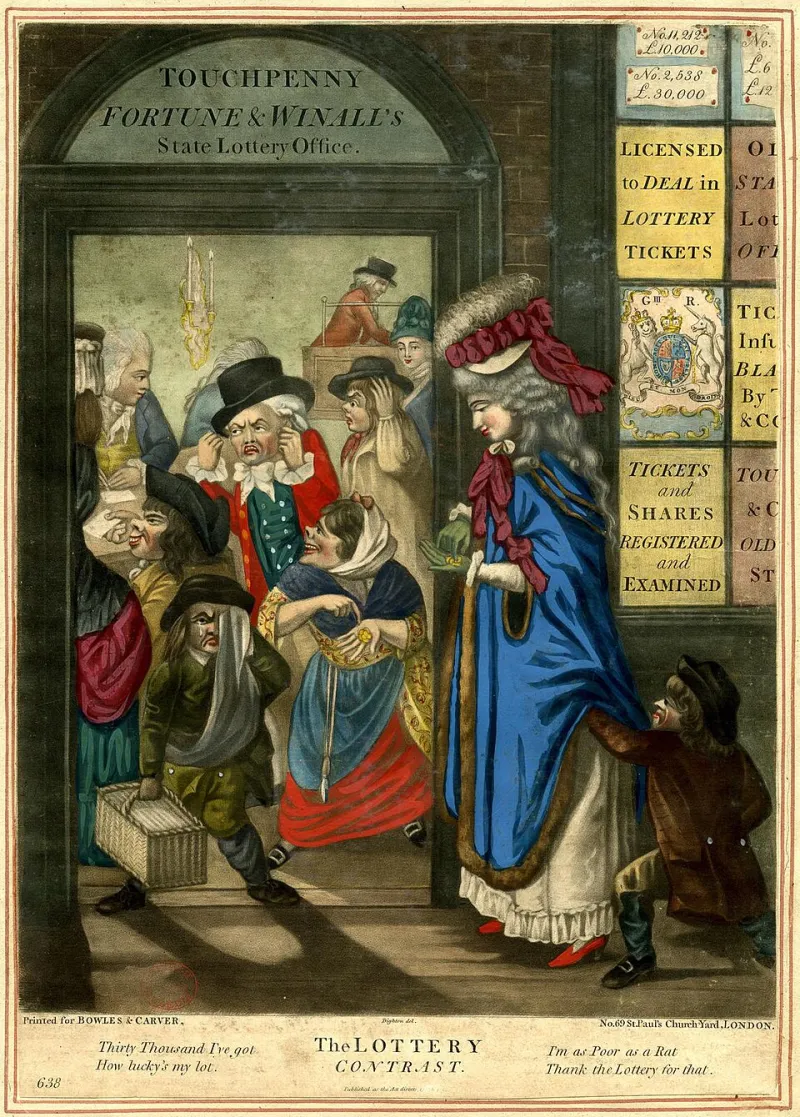
Photo: Sparrow (2019), CC0, via Wikimedia Commons
Here's a question that would've sounded absurd a decade ago: when does America buy lottery tickets?
If you guessed Friday afternoon at the gas station, you'd be describing 2012. Today, the answer looks a lot more like 11:47 PM on a Tuesday, phone in hand, blankets still warm, the glow of a jackpot counter reflecting off someone's face in the dark.
The data coming out of mobile lottery platforms tells a story nobody in the industry fully predicted. Late-night hours — roughly 10 PM to 2 AM — have become one of the fastest-growing purchase windows in the business, and in some markets, they now rival or beat the traditional daytime peaks.
The Corner Store Closed. The Lottery Didn't.
For most of lottery history, access was the governor on impulse. You wanted a ticket at 1 AM, you waited until the Sunoco opened. That friction did something unintentional: it filtered out a huge swath of would-be players whose whims died on the vine between midnight and morning.
Smartphones dissolved that filter. Now the person lying awake at 12:30 AM — replaying the day, worrying about rent, doom-scrolling through someone else's vacation photos — can act on the thought "what if" the second it arrives.
And they do. Platform data consistently shows a secondary purchase spike between 10 PM and 1 AM, with a notable cluster right around major jackpot rollouts. When a Powerball or Mega Millions prize crosses into headline territory, the late-night window doesn't just grow — it surges, often outpacing daytime volume for the first 48 hours after the rollover.
What's Actually Happening at 2 AM
It would be easy to frame all of this as pure impulse, and impulse is certainly part of it. But talking to behavioral researchers and looking at the patterns, the late-night player is a more complicated creature.
There's the hope-seeking crowd — people for whom a jackpot fantasy functions as a kind of mental escape hatch. Psychologists have long noted that imagining a windfall is one of the cheapest forms of optimism available, and 2 AM is when optimism is hardest to come by.
There's the wind-down player, for whom buying a ticket is less about winning and more about ritual — a small, low-stakes act of possibility before sleep.
And then there's the genuine night-shift demographic: nurses, bartenders, warehouse workers, the roughly 15% of American workers whose evenings are everyone else's middle of the night. For them, the 2 AM purchase isn't insomnia. It's lunch break.
The Always-On Question
Convenience is a wonderful thing right up until it isn't. The responsible-gambling community has been upfront about the tension here: the same frictionless access that helps a nurse on break also removes every natural pause point for someone whose judgment is running low at the end of a rough night.
Dr. Elena Marsh, a researcher who studies gambling behavior in digital environments, puts it plainly: "Decision fatigue is real. The 2 AM brain is not the 2 PM brain. Platforms that operate around the clock have a responsibility to build the brakes into the experience, because the old ones — closing time, driving home — no longer exist."
The encouraging news is that the tools exist and, on mobile, they're easier to deploy than ever. Deposit limits that tighten at night. Session reminders that hit differently when they interrupt a 1 AM scroll. Cool-down periods between purchase and play. The best operators are starting to treat these not as compliance checkboxes but as product features — and players, perhaps surprisingly, use them.
If you're a late-night player yourself, a few habits are worth stealing:
- Set your own clock. Decide your weekly budget when you're rested, not when you're staring at the ceiling.
- Use the night mode on your wallet, not just your screen. Lower deposit caps after 10 PM are a one-time setup that pays off forever.
- Notice the pattern. If your play clusters at hours when you're tired, lonely, or stressed, that's information worth having.
A New Rhythm, Not a New Game
None of this means the lottery has changed. The odds are as gloriously indifferent as ever, whether you buy at noon or at midnight. What's changed is the rhythm of play — the texture of when Americans get to dream a little.
The corner store will always have its place. But for a growing slice of the country, the lottery now lives in the quietest hours of the night, one tap at a time. The smart move — for players and platforms alike — is to meet that moment with eyes open, limits set, and a little self-awareness about what the 2 AM brain is really shopping for.