The Small-State Jackpot Loophole: Why the Smartest Ticket Might Come From a State You've Never Visited

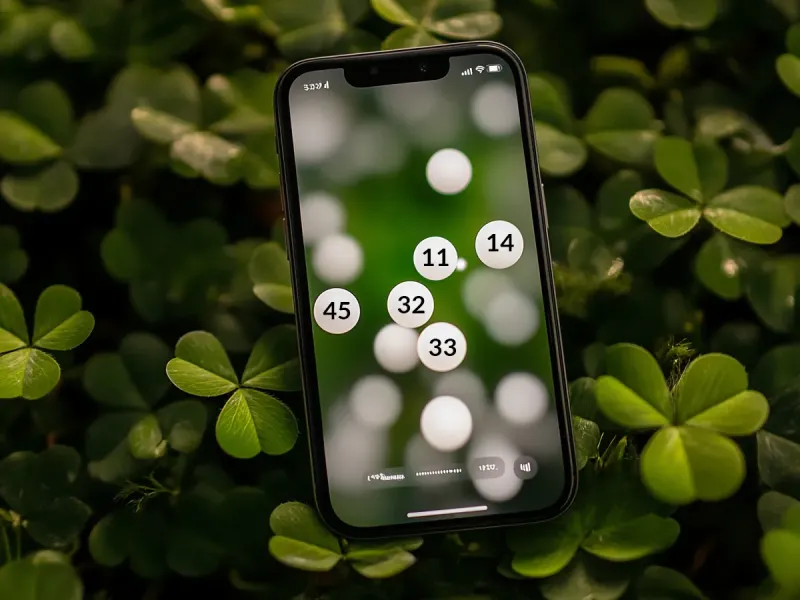
Photo: smartphone lottery app tickets on wooden table, via www.shutterstock.com
There's a quiet truth in the lottery world that the big-ticket marketing machines would rather you not think about: the games everyone plays are, mathematically speaking, the worst games to play. When 300 million Americans are fighting over the same Powerball pool, you're not really betting on numbers — you're betting on being the single unsplit survivor of a nationwide feeding frenzy.
Meanwhile, in states most lottery tourists couldn't find on a map, there are draws with odds that would make a Powerball diehard laugh. And thanks to mobile lottery betting, you don't need a driver's license from any of those states to get in on the action.
The Math Nobody Markets
Let's talk ratios. The headline jackpot number means nothing on its own. What matters is the jackpot divided by the odds of winning it — a rough measure of value per ticket.
Powerball's jackpot has to climb north of $700 million before its ratio even gets interesting, because your odds of hitting it sit at a brutal 1 in 292.2 million. Mega Millions is worse. Compare that to a state-level draw like, say, a regional game with a $2 million top prize and odds of 1 in 5 million. Pound for pound, that small draw is offering dramatically better value, even though the headline number looks tiny next to the billion-dollar billboards.
It's the same logic as a casino table game versus a carnival game. One is built on math that's merely bad. The other is built on math that's theatrical.
Where the Under-the-Radar Draws Live
A few patterns show up when you scan the country for overlooked games:
- Small-population states run friendlier odds. Wyoming, North Dakota, and Vermont don't have the player bases to support monster jackpots, so their games are structured around more achievable prizes and tighter number fields.
- Regional multi-state draws fly under the radar. Games like Lucky for Life or Tri-State's draw-based offerings pool a handful of states instead of 45, which keeps the odds dramatically tamer than the national giants.
- Mid-tier prize games are the sleeper picks. A $500,000 top prize sounds forgettable until you realize the odds of landing it might be 40 times better than landing Powerball's smallest meaningful prize tier.
None of these games will ever lead the evening news. That's exactly the point. Less hype means fewer players crowding the prize pool and fewer people sharing your exact number combination.
The Splitting Problem, Solved by Obscurity
Here's the part that really matters for your expected value: it's not just about the odds of winning — it's about the odds of winning alone.
Big national draws attract predictable number-picking behavior. People play birthdays, so numbers 1 through 31 get hammered. They play patterns on the playslip. When those draws hit, prize pools get carved into slices. The infamous 2016 Powerball split three ways is the extreme case, but low-level prize tiers get divided constantly.
Obscure state draws don't have that problem to nearly the same degree. Fewer players means less number-collision risk. When someone wins a small-state draw, they very often win it outright. That's real money that never makes the headlines — and it's the quiet edge that ratio-chasing players are hunting.
Your Phone Just Erased the State Line
Traditionally, this whole strategy required one inconvenient thing: being physically in the state. A Vermonter's best game was worthless to someone in Atlanta.
Mobile lottery betting changed the equation. Courier and betting platforms now let you place bets on draws from dozens of states wherever you happen to be standing, as long as you're in a state where online play is legal. The smartest ticket in America is no longer gated by your ZIP code — it's gated by whether you've bothered to look past the games with the loudest commercials.
A few practical notes before you go hunting:
- Check the rules where you are, not where the draw is. Online lottery play legality is state-by-state, and your location determines what you can access.
- Read the payout structure, not just the top prize. Some small draws have top-heavy prize tables; others spread value across more tiers. Your play style should match.
- Watch the draw schedule. Many regional games run nightly, which is a feature — more shots, faster feedback, less waiting around for a twice-weekly circus.
The Mindset Shift
None of this turns the lottery into an investment — it doesn't work that way for any game, anywhere. But if you're going to play anyway, playing the games where the math is least hostile is just common sense. The billion-dollar draws sell a fantasy. The small-state draws, quietly, sell something closer to a realistic shot.
So the next time the Powerball rolls past half a billion and your feed fills up with jackpot mania, consider opening your app and scrolling past the headliner. Somewhere in a state you may never visit, there's a draw with better odds, a thinner crowd, and a prize that — if your numbers land — you won't have to split with the entire Eastern Seaboard.
That's not a loophole, exactly. It's just attention to detail. And it fits in your pocket.